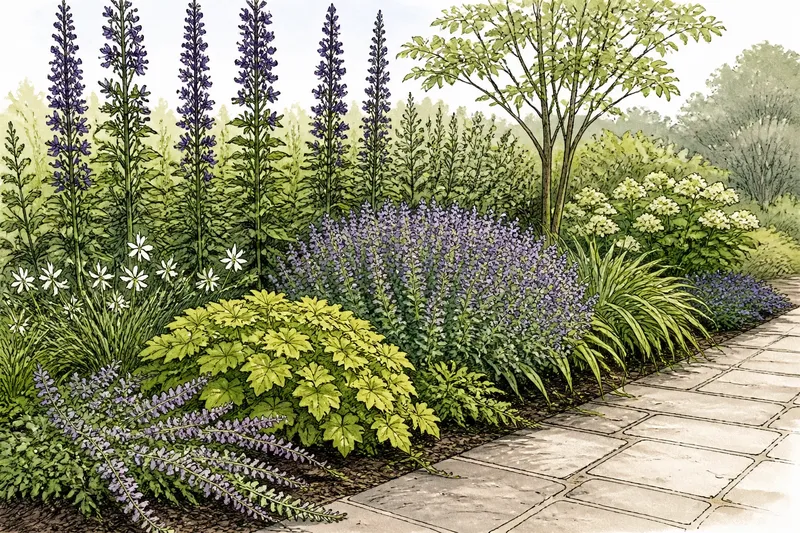
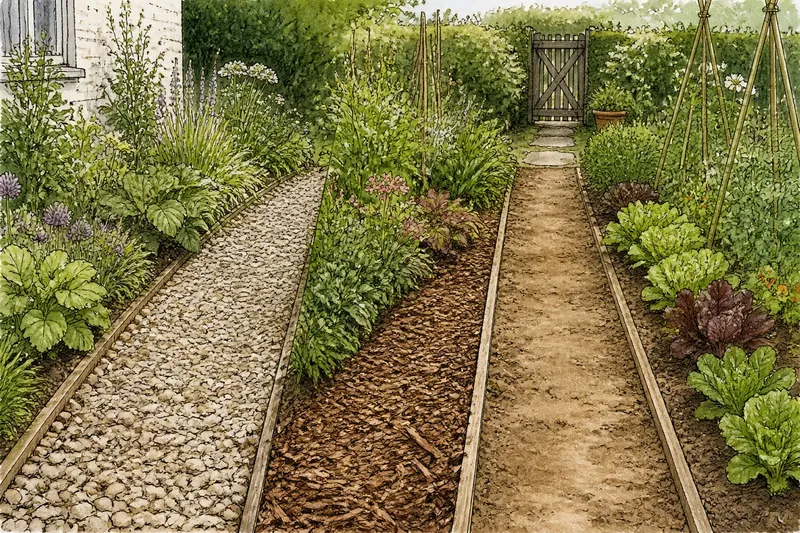
Why a Garden Does Not Need to Bloom All at Once
A garden does not need to bloom all at once: learn how foliage, seed heads, and quiet intervals give a planting character through the seasons.
The common mistake is judging a garden by how many flowers are open at one glance. That standard can lead to extra purchases and replanting while overlooking the foliage and seed heads that give a garden presence between blooms. A garden does not need to bloom all at once to feel considered; it needs moments worth noticing across changing seasons.
Think in moments, not one peak display
Plants do not flower on a shared schedule. Some open early, others wait for warm weather, and many finish while the season still has plenty of room to unfold. Trying to make every bed look equally florid at the same time can push a planting toward constant replacement rather than a sequence of distinct scenes.
Instead, look for a few clear moments: the first flowers near a path, a generous flush in a sunny bed, or late blooms visible from a kitchen window. Between those moments, leaves, stems, and open space remain part of the composition. This approach makes room for change without treating every pause as a problem to solve.
Start by noticing where you actually look. A narrow border beside the front walk may benefit from flowers at the time you use it most, while a distant bed can carry a subtler display of foliage. A garden is experienced from particular routes and viewpoints, not as a flat catalog of simultaneous blooms.
Foliage carries the garden between flowers
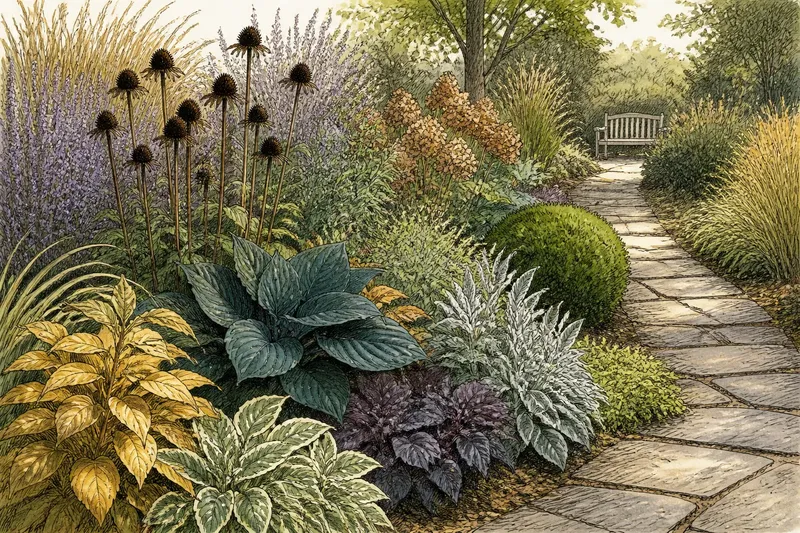
Leaves provide color, shape, and contrast after a plant’s flowers fade. A clump of broad, dark leaves can steady a busy patch of small blooms. Fine, arching foliage can soften a hard edge. Variegated or silvery leaves can catch attention even when the bed is quiet.
When choosing plants, consider how their leaves look before and after flowering. Ask whether the foliage will remain attractive, whether it tends to flop, and how it relates to nearby textures. A plant selected only for a brief flower display may leave a conspicuous gap once the petals fall. A plant with appealing leaves can keep that area visually connected to the rest of the bed.
Texture matters as much as color. Pairing several plants with similarly shaped leaves may make a planting feel uniform, even if their flowers differ. Contrasting large and fine leaves gives the eye something to compare through the season. Keep the combinations legible: a few repeated forms often make a stronger impression than a crowded assortment of unrelated textures.
Seed heads and stems extend a plant’s role
When flowers finish, many plants leave behind seed heads or upright stems. These structures add shape and hold a bed together when there are fewer petals to catch the eye. They can also provide food or cover for wildlife, depending on the plant and the garden’s conditions.
Do not assume every spent stem should be cut away immediately. Some look attractive standing, while others turn untidy, lean across a path, or obscure a neighboring plant. Judge each one in place. If it adds a clear silhouette or catches light, let it remain for a while. If it blocks movement or makes the planting look tangled, remove it selectively.
Say you have a sunny border where a purple-flowering perennial has finished, leaving dark seed heads above its leaves. If the stems stand upright and do not crowd the path, you might leave them while nearby foliage fills the foreground; the bed keeps a visible focal point after the flowers are gone. If those same stems collapse into a walkway, cutting them back is a practical choice, not a failure to appreciate seasonal character.
Quiet intervals need structure
A quiet interval is the time when few flowers are open, not a stretch in which nothing is happening. Leaves may be emerging, a clump may be building size, or a bed may be resting after a display. The garden can still feel composed if it has structure to hold the view.
Structure can come from evergreen plants, a repeated line of grasses, a clipped shrub, or the shape of a path and its edging. It can also come from how plants are grouped. Repeating a few dependable forms across a bed gives the eye a thread to follow when color is scarce. This is different from filling every gap: empty ground can make the forms that remain easier to see.
Look at the planting from a distance as well as close up. From the porch, a mass of leaves may read as a calm, cohesive shape. At the bed’s edge, the same area may reveal fine stems, new growth, and seed heads. Both views matter. A garden that offers detail up close and a clear outline from farther away can carry a quieter season without needing a blanket of flowers.
Choose a rhythm that fits your garden
Plan for a succession of scenes rather than continuous bloom. Start with what is already growing, identify the view and seasonal pause that matter to you, then decide whether a new flower, a useful foliage contrast, or a little more structure would improve it. This keeps the plan tied to your garden instead of a general demand for more color.
How do I plan flowers across the season?
Write down when existing plants flower and note which gaps matter from the places you use most. Check plant labels and ask a regional nursery about timing for your conditions; if the gap is brief or the foliage still appeals, keep the planting as it is, but if the view repeatedly feels bare, consider one plant that flowers then or adds lasting leaf interest.
Should I remove every spent flower?
No. Check whether a spent stem contributes shape, obstructs a path, or makes the bed look tangled. If it stands neatly and suits your garden, leave it; if it blocks movement or obscures nearby plants, cut it back selectively, following the plant’s care guidance.
What can I notice in a garden without flowers?
Look for leaf color, stem patterns, changing shadows, and the outline of each planting. If those features give the view shape and the path remains inviting, let the quiet interval continue; if one area looks muddled, adjust the specific foliage or stems that cause the problem.
Does a quiet interval mean I chose the wrong plants?
Not by itself. Check whether the pause feels restful and whether leaves and forms remain appealing; if they do, keep the mix, but if the same view repeatedly bothers you, identify what it lacks before making a small change.
Make room for change rather than constant replacement
Before adding plants to fill a lull, spend time watching the area through its transition. A bed that looks sparse after flowering may soon develop fresh foliage or a different texture. If it still feels empty, decide what the view lacks: a low leaf form, a taller silhouette, or a point of color at a useful moment. That answer is more helpful than a general instruction to add more flowers.
Use a simple observation list to turn that decision into a manageable task:
- Check whether the quiet spot is visible from a path or window you use often; if it is, plan a targeted change, but if it is rarely seen, leave it alone unless it affects access.
- Check whether nearby leaves stay attractive after flowering; if they do, keep the existing planting, but if they fade or flop, consider a contrasting foliage plant suited to the site.
- Check whether seed heads stand upright and add a clear shape; if they do, leave them for now, but if they lean into a walkway, cut back only the obstructing stems.
- Check whether the bed has a repeated form, such as grasses or a clipped shrub; if that form holds the view, preserve it, but if the planting has no visual anchor, consider repeating one suitable form.
- Check whether open ground makes the remaining plants easier to see; if it does, keep the space open, but if bare soil looks accidental to you, add a plant that fits the light and soil rather than filling it at random.
- Check whether the gap returns at a time you care about; if it does, note the season and ask a local nursery for plants that suit your conditions, but if it is a passing pause, wait before buying anything.
Imagine a hypothetical border beside a kitchen window where a spring perennial has finished and left a bare-looking patch. You note that the patch is visible during your usual morning routine, its neighboring leaves remain attractive, and the seed heads are upright rather than blocking the path. Because the foliage and stems still give the bed structure, you decide not to buy a replacement this season; if the same view remains unsatisfying in a later season, you can identify whether it needs a flower at that time or a different leaf shape before choosing a plant.
Garden care also shapes the rhythm. Cutting everything down at once can erase seed heads and stems that would otherwise carry interest. Leaving every spent plant indefinitely can make a bed difficult to use. Keep what contributes and remove what obstructs so the planting can change without becoming either rigid or neglected.
A garden does not need to bloom all at once; it can offer a sequence of distinct views, with foliage and seed heads holding their place between displays. When you walk past, pause at one section and ask what is giving it shape today. The answer may be a leaf, a stem, or a patch of open ground; noticing it can help you decide what to keep for the next season.