Gravel, Bark, or Bare Ground Between Garden Beds?
Gravel, bark, or bare ground between garden beds: compare their look, underfoot feel, and soil visibility to choose a surface that suits your path.
The most common mistake when choosing gravel, bark, or bare ground between garden beds is picking by color alone. A surface that looks right in a sample may feel awkward on the route you use most, or hide the soil when you want the planting to remain visible. Decide first what the gap needs to do: read as a path, make a soft pause between beds, or let the ground remain part of the garden’s appearance.
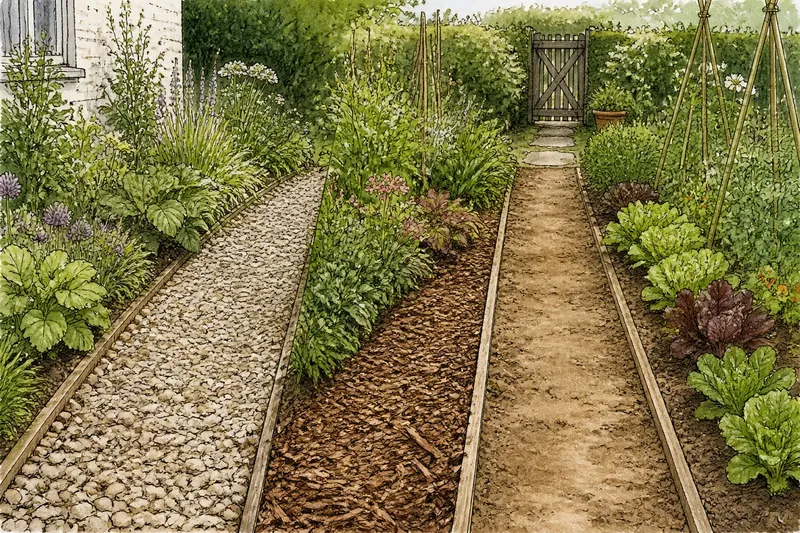
Each choice gives the space a different visual weight. Gravel tends to make a defined, crisp strip; bark reads softer and more naturalistic; bare ground keeps attention on the soil and plants. The best fit depends on the garden’s style, how often people cross the gap, and whether you want to see the ground surface itself.
Which surface looks most at home between your beds?
Gravel suits a garden where you want a clear line or a deliberately finished edge. Its consistent texture can echo stone edging, a gravel courtyard, or a restrained planting scheme. Choose a color that sits comfortably beside the bed edges and nearby paving, rather than treating the gravel as a separate feature.
Bark gives a less formal impression. Its varied pieces blend readily with leafy borders and informal paths, though the texture can look visually busy beside plants with equally intricate foliage. Bare ground is the quietest choice when the soil is attractive and the beds already provide enough color and detail. It can also make the planted areas feel connected rather than separated by a conspicuous strip.
Look at the gap from the places where you usually see it: a kitchen window, a gate, or the end of a path. A small sample spread on the ground can help you judge whether the surface recedes or draws the eye. Check it against the bed edging as well as the plants; a strong contrast can make a narrow space seem more sharply divided.
What feels best underfoot on a garden path?
Gravel has a loose, shifting feel. It can suit a route used at an unhurried pace, but small stones may move under shoes and create an uneven sensation. The particular stone shape and size affect that feel, so handle a sample rather than judging by a photograph.
Bark is generally softer underfoot, though its pieces also move and can feel springy or uneven. It makes sense where a natural, yielding surface matters more than a firm, smooth stride. Bare ground offers a direct connection to the garden, but its feel changes with its condition: dry soil may be firm, while damp or recently disturbed soil can feel soft and cling to footwear.
For a route used to carry a watering can, harvest a basket, or reach a shed, consider the whole trip rather than a single step. If you expect frequent passage, test the proposed surface in a short section and walk it in the footwear you normally use. A path should feel comfortable enough for its everyday task, not just look composed from a distance.
How much soil will each choice leave visible?
Bare ground leaves the most soil in view. That can suit a garden where soil texture is part of the design, or where a simple gap helps the beds look open. It also makes the surface’s condition conspicuous, so patches, footprints, and changes in moisture remain easy to see.
Gravel covers the soil with a distinct layer while keeping the surface visually open between stones. Bark covers it more continuously and gives the gap a softer, more unified appearance. Neither reads as bare soil, even if small spaces between pieces reveal glimpses of the ground below. If visible earth is a priority, bare ground is the clearest choice; if you want a finished surface without a solid paved look, compare gravel and bark samples in place.
Imagine a narrow gap beside a leafy kitchen bed that also serves as the walk to a back gate. If you want the planting to remain the main visual feature and prefer a softer route, bark could suit the space; if you want a sharper border and a more pronounced path, gravel may fit better. If seeing the soil matters most and the gap is used only occasionally, leaving it bare may be the simplest expression of that preference.
Which option suits a narrow gap versus a regular route?
A narrow gap that is mostly viewed rather than walked can be treated as a visual interval. Bare ground keeps it understated; bark gives it a soft, continuous band; gravel makes even a slim strip appear clearly edged. Avoid choosing a highly contrasting surface without checking how it divides the beds from the main garden view.
A regular route needs more attention to movement. Gravel can shift, bark can scatter, and bare ground can change under damp conditions. Think about the people who use the path, what they carry, and whether the surface should read as a route or as a garden bed’s quiet margin. For a frequently used passage, a firm, even path may be more suitable than any of these loose or exposed options.
Also consider how the surface meets the bed edge. A crisp boundary can make gravel look intentional, while bark often works with a softer transition. Bare ground can look deliberate when the surrounding beds are orderly, but an irregular edge may make the gap seem unfinished. The boundary matters as much as the surface material.
How do you choose between gravel, bark, and bare ground?
Which surface makes a garden look more formal?
Gravel usually gives a gap the clearest, most orderly definition, especially beside a neat edge. Bark and bare ground tend to read as softer or less formal, depending on the surrounding planting.
Which choice shows the most soil?
Bare ground leaves the soil directly visible. Gravel and bark cover it with a material layer, though their textures differ in how open or continuous they appear.
Which surface feels softer to walk on?
Bark generally feels softer than gravel, but both can shift beneath a shoe. Bare ground may feel firm or soft according to its condition, so judge the actual spot and not just the material name.
Can gravel or bark work in a space that is barely a path?
Yes, either can mark a gap as a deliberate strip, even if it sees little foot traffic. Choose by the visual effect you want and check that the material does not overpower the beds.
What should you check before settling on a surface?
Make the decision in the garden rather than from a product image. Compare the surface in the light and view you care about, then ask whether its feel and appearance match the way you use the gap.
- View from the house: Does the surface draw attention away from the beds or help them read clearly?
- Soil visibility: Do you want the earth exposed, partly glimpsed, or covered?
- Foot traffic: Will people cross occasionally, or use this as a regular route?
- Underfoot feel: Does a sample feel comfortable in ordinary garden shoes?
- Bed edge: Does the transition look crisp, soft, or unfinished?
- Nearby materials: Does the surface sit naturally beside the edging, paving, and plants?
For a practical comparison, place small samples of gravel and bark beside a patch of bare ground, then view all three from the route and the nearest window. That simple check makes the central choice clearer: gravel defines the gap, bark softens it, and bare ground lets the soil remain part of the design. Use that distinction to choose gravel, bark, or bare ground between garden beds for the job the space actually has.